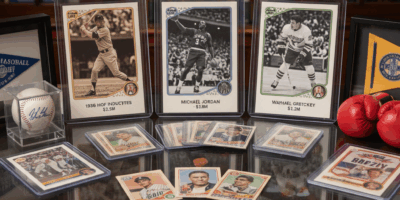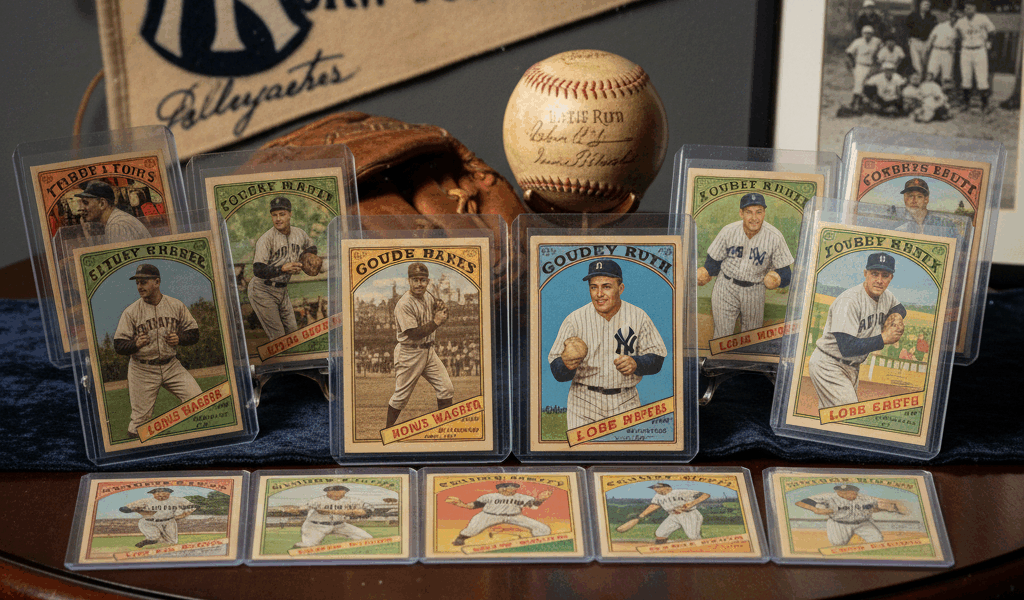
Pre-war card collecting has gotten complicated with all the reprints and authentication concerns flying around. As someone who’s fallen down the vintage rabbit hole, I learned everything there is to know about the T206 tobacco era and 1930s Goudey cards. Today, I will share it all with you.
Why These Cards Are Holy Grails
That’s what makes T206 and Goudey endearing to us vintage collectors — they’re baseball history you can hold. These cards predate modern manufacturing, modern collecting, modern everything.
Key sets that matter:
- T206 (1909-1911) – The Monster, most collected pre-war set
- Goudey (1933-1934) – First bubble gum cards, Ruth and Gehrig
- T205 (1911) – Gold Border beauties
- Play Ball (1939-1941) – Bridge to modern era
The T206 Honus Wagner
Probably should have led with this section, honestly. The Wagner is the hobby’s most famous card. Only 50-75 exist. They sell for hundreds of thousands to millions depending on condition.
Why so rare? The popular theory: Wagner objected to his image selling tobacco products. Whether true or legend, the scarcity created a collecting icon.
Authentication Is Critical
Reprints and counterfeits plague the vintage market. Before spending significant money:
- Buy graded – PSA, SGC, or BGS authentication
- Know your paper stock – Pre-war cards feel different than modern
- Check printing patterns – Original lithography has telltale characteristics
- Research backs – T206 has 16 different advertising backs
Condition Standards
Grading scales shift for vintage. A T206 in PSA 5 is respectable. PSA 8 is exceptional. PSA 10 essentially doesn’t exist for cards this old.
Don’t expect modern standards. These cards are over 100 years old. They survived without protection through decades of handling, wars, and house fires. Survivors deserve respect.
Entry Points for New Collectors
You don’t need a Wagner to collect vintage:
- T206 commons – Start around $50-100 in lower grades
- Goudey non-stars – Affordable examples exist
- Cracker Jack cards – Another classic set with entry-level options
Building Vintage Knowledge
Study before spending. Learn what authentic examples look like. Handle cards at shows. Join vintage collector groups. The education protects your investments and deepens appreciation for these pieces of baseball history.