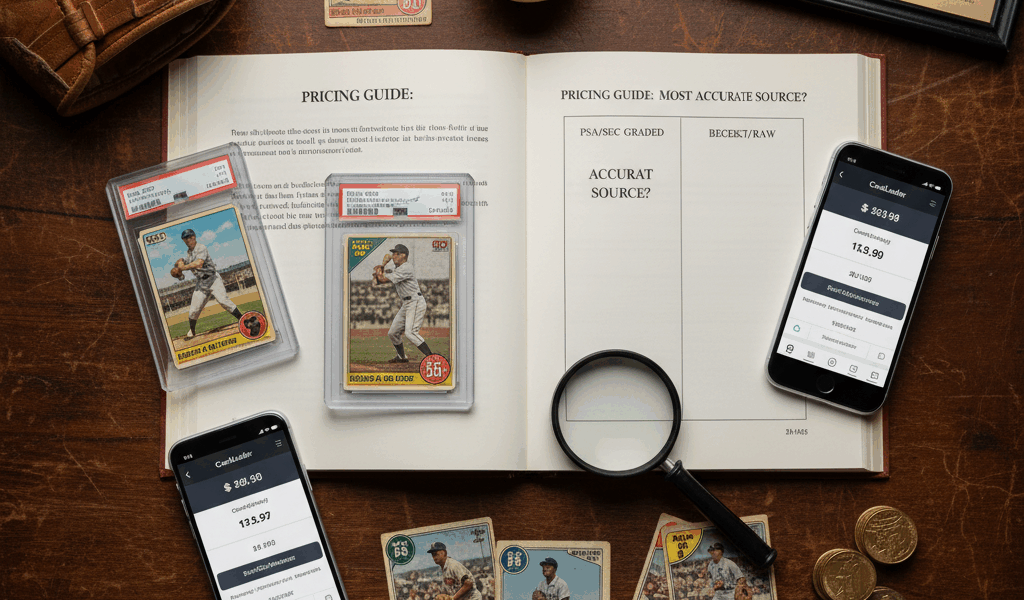
Sports card pricing has gotten complicated with all the different valuation sources competing for authority. As someone who’s cross-referenced prices across every major platform, I learned everything there is to know about which sources actually reflect reality. Today, I will share it all with you.
The Big Three Pricing Sources
That’s what makes pricing research endearing to us serious collectors — understanding where to look separates informed buyers from marks.
The main options:
- eBay sold listings – Real transactions, best for current market
- PSA Price Guide – Historical data, useful for trends
- Beckett – Traditional guide, still referenced by some dealers
Why eBay Sold Listings Win
Probably should have led with this section, honestly. eBay sold listings show what people actually paid. Not what someone hopes to get. Not a calculated average from months ago. Real money changing hands today.
How to use eBay effectively:
- Filter by “sold items” not active listings
- Look at last 30-90 days of sales
- Account for condition differences between sales
- Watch for outliers (shill bids, condition issues)
The Beckett Problem
Beckett prices often lag the market by months. They update quarterly in many cases. A card that’s doubled in value might still show the old price. Conversely, a card that’s crashed might still list at peak pricing.
Some dealers still price off Beckett because it often shows higher values than actual market. Know this going in.
PSA Price Guide Uses
PSA’s pricing works best for:
- Tracking long-term trends
- Comparing relative values across grades
- Estimating vintage card values where eBay data is thin
It’s less reliable for current pricing on actively traded modern cards.
Other Tools Worth Using
Additional pricing resources:
- 130point.com – eBay sold data with better search
- Market Movers – Tracks price changes over time
- Card Ladder – Subscription service with detailed analytics
- PWCC auction archives – High-end sales history
The Best Approach
Use multiple sources. Check eBay sold for current market. Reference PSA for historical context. Compare across different grades to understand the premium spread from PSA 8 to PSA 10.
No single source tells the whole story. The collectors who pay the right prices triangulate information from everywhere.