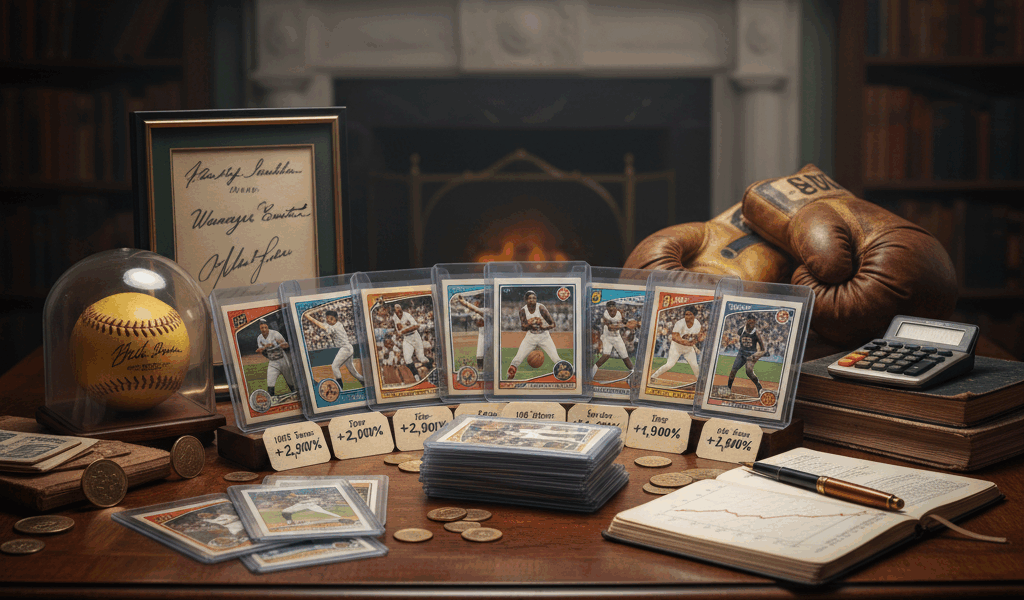
Sports card investment returns has gotten complicated with all the cherry-picked success stories flying around from people trying to sell you something. As someone who’s tracked portfolio performance across a decade, I learned everything there is to know about what real returns look like. Today, I will share it all with you.
The Reality Check
That’s what makes investment talk endearing to us collectors who approach this honestly — separating hype from data matters for making real decisions.
The truth: Most sports cards lose money or barely break even over ten-year periods. The outliers create survivorship bias in the stories you hear.
What Has Actually Performed
Probably should have led with this section, honestly. Categories that have shown genuine appreciation over decade-plus timeframes:
- Vintage blue-chip rookies – Mantle, Aaron, Mays continue climbing
- Modern rookie PSA 10s of Hall of Famers – Jeter, Brady, LeBron
- True scarcity items – T206 Wagner, 52 Topps Mantle, key rookie autos numbered to 25 or less
Notice the pattern: established greatness plus genuine rarity.
What Hasn’t Performed
Vast categories of cards have gone sideways or down:
- Junk wax everything (1987-1993)
- Prospect cards of players who didn’t pan out
- Mid-tier autos from overproduced products
- Base cards from any modern set
The 10-Year Math
Simple framework for investment potential:
- Blue chip vintage – Has historically returned 5-15% annually
- Modern star rookies (graded) – Highly variable, volatile
- Speculative modern – Effectively gambling
Compare to stock market returns averaging 7-10% annually. Cards need to beat that to justify the illiquidity and storage requirements.
The Costs People Forget
Calculating real returns requires factoring in:
- Grading fees
- Insurance
- Safe storage
- Selling fees (eBay takes 13%+)
- Capital gains taxes
A card that “doubled” in ten years might have broken even after expenses.
The Honest Perspective
Collect what you enjoy. If cards also appreciate, that’s a bonus. Building a portfolio purely for investment returns has beaten the stock market for very few collectors over meaningful time periods.
The winners you hear about are outliers. They make good stories but poor planning templates.