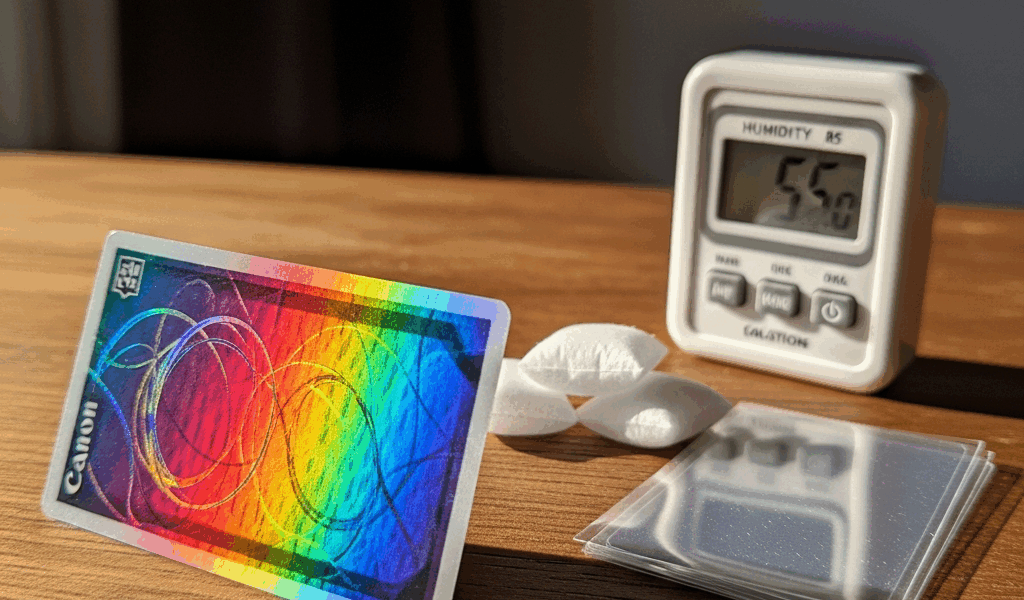
Why Holo Foil Cards Warp in the First Place
Holo foil card warping has gotten complicated with all the bad advice flying around. As someone who has cracked open hundreds of booster packs over the years, I learned everything there is to know about foil warping — the hard way, mostly. Today, I will share it all with you.
But what is foil warping, exactly? In essence, it’s a tension problem between two materials that refuse to cooperate. But it’s much more than that. The foil layer bonded to one side of the card expands and contracts at its own rate when humidity or temperature shifts. The cardboard beneath it moves differently. That mismatch builds stress. Eventually, the card curves — sometimes slightly, sometimes into a full banana shape you could practically eat cereal out of.
Cheaper cards go first. Your bulk commons and uncommons with thinner foil stock? Gone by summer. Premium holos with better manufacturing tolerances hold longer, but nothing is immune.
Two culprits cause most of the damage: humidity and bad storage pressure. A basement sitting at 65% relative humidity in July will absolutely wreck foil cards left in loose sleeves. Stacking too much weight on top of sleeved cards in a shoebox does the same thing — pressure pushes them into curved shapes that eventually set permanently. The good news? Early warping reverses. The better news? With the right setup, it never happens at all.
The Penny Sleeve and Book Method That Actually Works
This is the method I use for every foil card I care about. Low-risk. Requires almost nothing. Produces real results in most cases — at least if you’re patient enough to actually wait it out.
Let the warped card sit at room temperature for 30 minutes first. Cold cards are brittle. Rushing this part risks cracking. Slide the card into a penny sleeve with the foil facing inward, so neither side is exposed to direct contact pressure. That detail matters more than most people realize.
Now grab two flat, heavy objects. I use hardcover textbooks — dense ones, the kind that cost $200 new and weigh as much as a small child. Ceramic tiles work. Concrete pavers work. Even stacked magazines work if the warp isn’t severe. Lay the sleeved card flat. Place the weight on top. Make sure the pressure spreads evenly across the whole card surface, not just the edges.
Then leave it alone. Twenty-four hours minimum. Seventy-two hours is ideal. Don’t flip it every few hours to check. Don’t peek. Just walk away. I’ve watched genuinely ugly warps flatten completely in that window, which still surprises me every time.
Realistic expectations: minor to moderate warps flatten almost entirely. Severe bows — the boomerang-shaped disasters — improve significantly but may never sit perfectly flat again. This method is safe for cards you plan to grade later. No heat. No chemicals. Nothing that triggers PSA or BGS to dock condition points.
Using Humidity to Reverse a Warp Without Ruining the Card
Probably should have opened with this section, honestly. Once you understand that humidity causes warping, using a controlled dose of humidity to reverse it feels wrong — but it works.
This approach is best on older, stubborn warps where the book method alone hasn’t moved things enough. Here’s how:
- Grab a clean, sealed plastic food container — the $3 kind from any grocery store works perfectly
- Place a damp, not wet, cotton pad or small sponge inside. You want humid air, not pooled water
- Sleeve your card in a penny sleeve and lay it flat inside the container, not touching the pad directly
- Seal the lid. Leave it for 15 to 30 seconds only — not minutes, not “just a little longer.” Seconds.
- Pull the card out immediately and press it between your heavy books as described above
That brief humidity exposure makes the foil layer pliable. Water vapor doesn’t penetrate deep enough to cause damage in that timeframe. The book pressure then sets the card flat as everything dries. That’s what makes this method endearing to us collectors — it fights humidity with humidity, and it actually holds.
Caution here is non-negotiable. I’m apparently impatient about this stuff, and leaving a card in a humidity chamber for three minutes once cost me a vintage holo I still think about. A faint brown spot appeared within a week. Irreversible. Thirty seconds is your ceiling. Don’t make my mistake.
Methods That Seem Safe But Will Damage Your Card
Heat destroys foil cards. Full stop.
A microwave melts the foil layer into a warped, shiny disaster. An iron does the same thing, just slower. Hair dryers and heat guns — even on low settings — warp foil faster than they flatten anything. I’ve watched collectors try all of these out of desperation. It never ends well.
Stacking unsleeved warped cards directly on top of each other is another common mistake. The warping transfers. You start with one problem card and end up with five. The physics of this are unforgiving.
Moisture-heavy approaches are equally bad — leaving cards near humidifiers, wrapping them in damp cloth, storing them in damp basements. Mold establishes on cardboard fast. Surface spotting appears within hours of serious moisture exposure. The foil layer clouds. Those spots don’t come out.
How to Store Foil Cards So They Never Warp Again
Prevention is cheaper than fixing. Much cheaper.
Top loaders are your best option, as foil card storage requires rigidity above everything else. That is because rigid holders eliminate the flex that causes warping in the first place. Standard top loaders run $0.10 to $0.25 per card depending on brand — Ultra PRO works for me while generic off-brand versions never seem to hold their shape as reliably. For high-value holos, card savers made specifically for grading submission are worth the slight extra cost.
While you won’t need a full climate-controlled room, you will need a handful of humidity management tools. Keep storage areas between 35% and 50% relative humidity. A small dehumidifier — the $40 to $80 range covers most closet-sized spaces — pays for itself by saving even one premium foil. Silica gel packs inside storage boxes add another layer of protection for almost nothing.
First, you should store top-loaded cards in upright rows — at least if you’re stacking any significant volume. Flat stacking applies downward pressure across every card beneath the pile. Standing them upright shifts the weight load to the edges, where cards are structurally strongest.
Check the collection every three months or so. Early warping is fixable. Late warping is a project. Catching it at the first hint of a curve means the book method alone usually handles it in 72 hours flat.

Stay in the loop
Get the latest collector sports world updates delivered to your inbox.