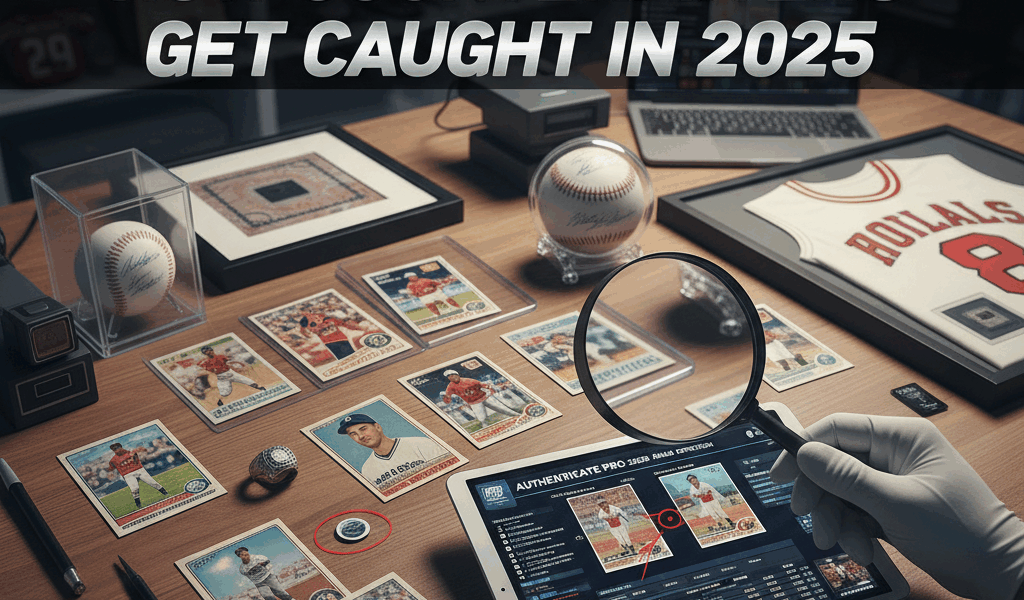
Sports card counterfeiting has gotten complicated with all the advanced printing technology available now. As someone who’s examined thousands of cards and spotted my share of fakes, I learned everything there is to know about how bad actors get caught. Today, I will share it all with you.
The Authentication Arms Race
That’s what makes card authentication endearing to us collectors — companies like PSA and BGS constantly develop new security features. Counterfeiters try to keep up. Authenticators stay one step ahead. Usually.
Modern graded slabs contain multiple anti-counterfeiting elements:
- Holographic labels – Extremely difficult to replicate accurately
- Microprinting – Text too small to reproduce with standard equipment
- UV-reactive inks – Hidden features visible only under blacklight
- Database verification – Every cert number traceable online
How Fakes Get Caught
Probably should have led with this section, honestly. Most counterfeiters fail on small details. The card stock feels wrong. Colors are slightly off. Centering measurements don’t match genuine examples.
Red flags that expose fakes:
- Price too good – If a deal seems impossibly cheap, it probably is
- Seller reputation – New accounts selling high-end cards
- Photo quality – Blurry images hide defects and forgery tells
- Cert number issues – Numbers that don’t verify or verify to different cards
The Trimming Problem
Card trimming — shaving edges to improve centering — is technically counterfeiting. Grading companies catch trimmers by measuring cards against known standards. Even tiny variations in dimensions trigger rejection or qualification.
Autograph Forgeries
Fake signatures remain common on raw cards. Certified autographs from reputable authenticators are much safer. Look for authentication stickers on vintage autos and verify cert numbers online.
Some tells on forged autos:
- Pen hesitation marks from tracing
- Inconsistent pressure throughout signature
- Signatures that don’t match known authentic examples
Protecting Yourself
Buy graded when spending serious money. Verify cert numbers before purchasing. Research seller feedback carefully. Request additional photos showing label details and case integrity.
For raw cards, only buy from established dealers you trust. The risk of counterfeits increases dramatically when buying from unknown sources at shows or online.
Reporting Counterfeits
If you spot fakes, report them. eBay has dedicated reporting tools. Grading companies want to know about forged slabs. The collecting community benefits when fakes get pulled from circulation.