
Storing sports cards properly has gotten complicated with all the options and horror stories about damage flying around. As someone who’s seen collections ruined by bad storage and preserved others perfectly, I learned everything there is to know about keeping cards safe. Today, I will share it all with you.
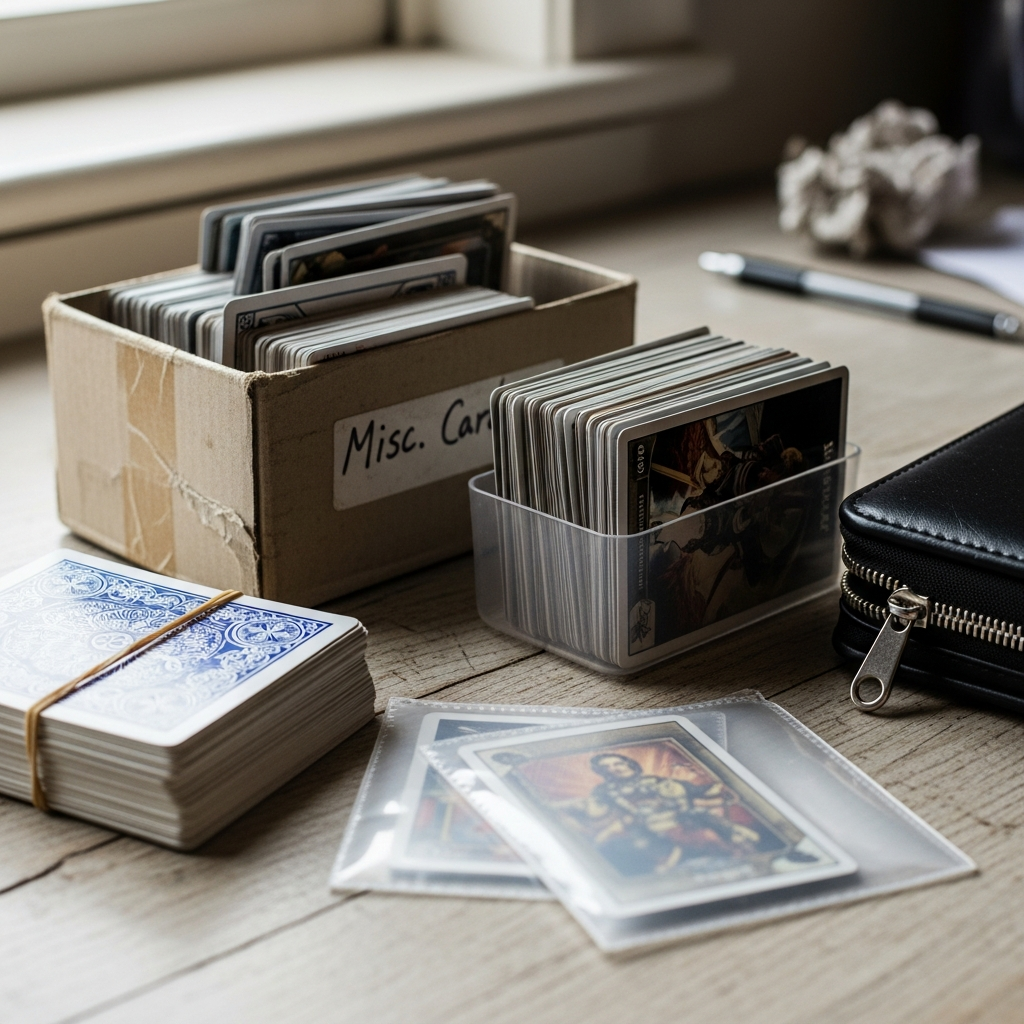
The Enemies of Cards
That’s what makes storage endearing to us collectors who’ve invested money and emotion into our holdings — proper protection preserves both value and memories.
What damages cards:
- Light – Fades colors and yellows paper
- Heat – Warps and accelerates deterioration
- Humidity – Causes warping, mold, and stuck cards
- Physical contact – Scratches surfaces, dings corners
- Acidic materials – Slowly destroy paper over decades
The Basic Protection Stack
Probably should have led with this section, honestly. Standard protection from inside out:
- Penny sleeve – First layer against surface contact
- Top loader or Card Saver – Rigid protection
- Team bag – Seals against dust and humidity
This combination handles 90% of collection storage needs.
Beyond Basic: One-Touch and Magnetic Cases
For valuable cards, upgrade to:
- One-touch magnetic holders – Premium display and protection
- Screw-down cases – Ultra-rigid, good for thick cards
- Graded slabs – If submitting to PSA, BGS, or SGC
Bulk Storage Solutions
For large collections:
- Card boxes – 800-count, 3200-count standard sizes
- Binders with nine-pocket pages – Good for set building
- Filing cabinets – Professional approach for serious volume
Use dividers and labels. Organization prevents damage from excessive handling while searching.
Environmental Control
Store cards in:
- Temperature-controlled spaces (not attics or garages)
- Away from windows and direct light
- Off floors (flood protection)
- Away from exterior walls (temperature fluctuation)
Consider silica gel packets in storage boxes if humidity is a concern.
Common Mistakes
Errors that destroy collections:
- Rubber bands (leave marks, degrade)
- Rubber cement or tape
- PVC sleeves (react with ink over time)
- Attic or basement storage
Invest in proper supplies. Replacement cost of damaged cards exceeds supply costs by orders of magnitude.



Stay in the loop
Get the latest collector sports world updates delivered to your inbox.