
Understanding PSA grading has gotten complicated with all the service level changes and market fluctuations flying around. As someone who’s submitted hundreds of cards and tracked the results, I learned everything there is to know about whether professional grading makes financial sense. Today, I will share it all with you.
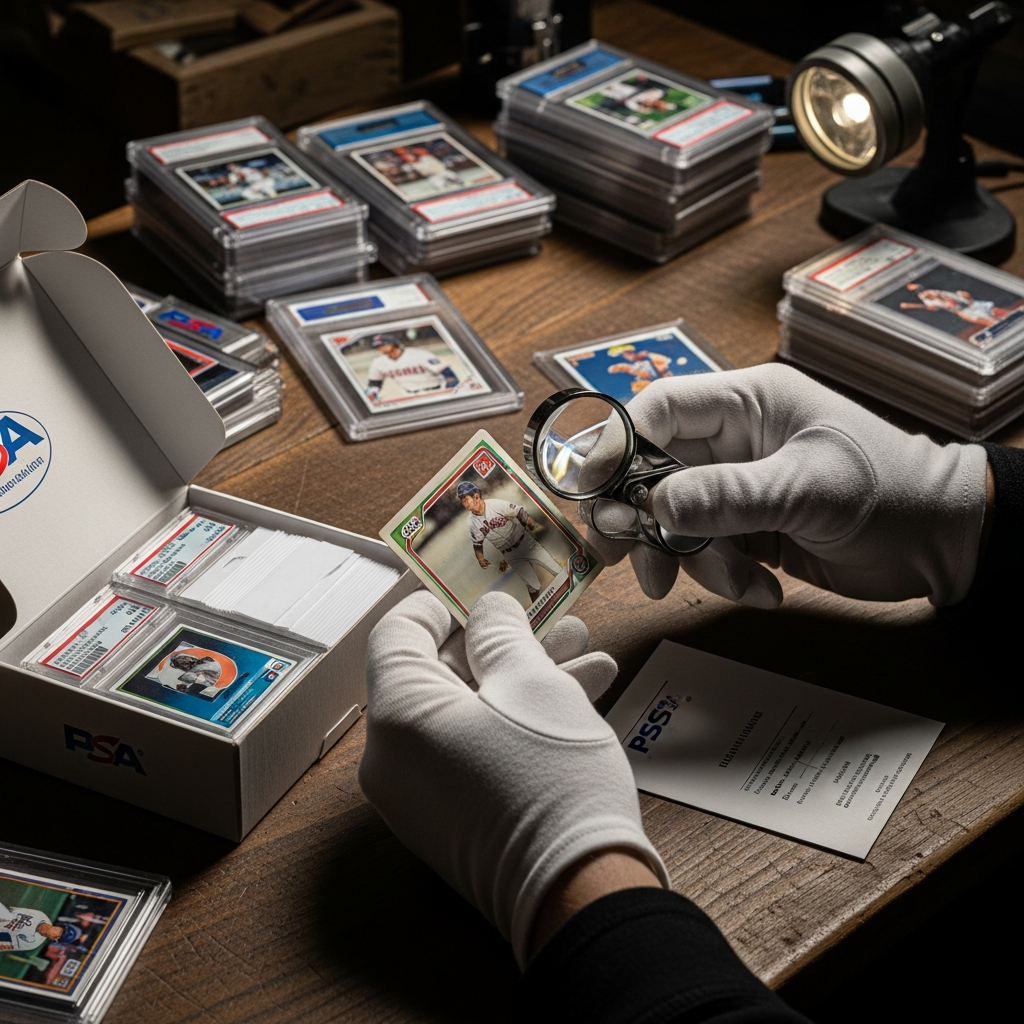
What PSA Does
That’s what makes PSA endearing to us collectors seeking standardization — they examine cards and assign condition grades from 1 to 10. The encapsulation protects cards and makes grades instantly visible to buyers.
PSA grading became the industry standard through consistent standards, large population reports, and market acceptance.
The Grading Scale
Probably should have led with this section, honestly. PSA grades and what they mean:
- PSA 10 Gem Mint – Perfect or virtually perfect
- PSA 9 Mint – Minor imperfection only under close examination
- PSA 8 NM-MT – Small imperfection visible to naked eye
- PSA 7 and below – Progressively more visible wear
The value cliff between grades is steep. A PSA 10 might be worth 3-10 times a PSA 9 of the same card.
Current Pricing
PSA service levels and approximate costs:
- Value – $25-30 per card (cards under $500 value)
- Regular – $50-75 per card (standard service)
- Express – $150+ per card (faster turnaround)
- Super Express – $300+ per card (rush service)
Bulk submissions reduce per-card costs but require higher volumes.
The Value Calculation
Before submitting, do the math:
- Estimate the likely grade (be realistic)
- Look up sold prices for that grade
- Subtract grading cost and shipping
- Compare to raw card value
If the graded value doesn’t substantially exceed raw + costs, keep the card raw.
When Grading Makes Sense
Submit cards when:
- Raw value exceeds $50-100 (economics work better)
- The card has realistic PSA 9+ potential
- You plan to sell or need insurance documentation
- Authenticity concerns exist and you want PSA verification
When to Skip Grading
Don’t bother if:
- Card has visible flaws (won’t grade high)
- Raw value is low (costs exceed value bump)
- You’re keeping the card for personal collection
- The player is unlikely to appreciate significantly
Grading is a tool, not a requirement. Use it strategically.



Stay in the loop
Get the latest collector sports world updates delivered to your inbox.