
The legacy of autographed sports items has gotten complicated with all the authentication debates and forgery concerns flying around. As someone who’s built an autograph collection over many years, I learned everything there is to know about the history and significance of signed sports treasures. Today, I will share it all with you.
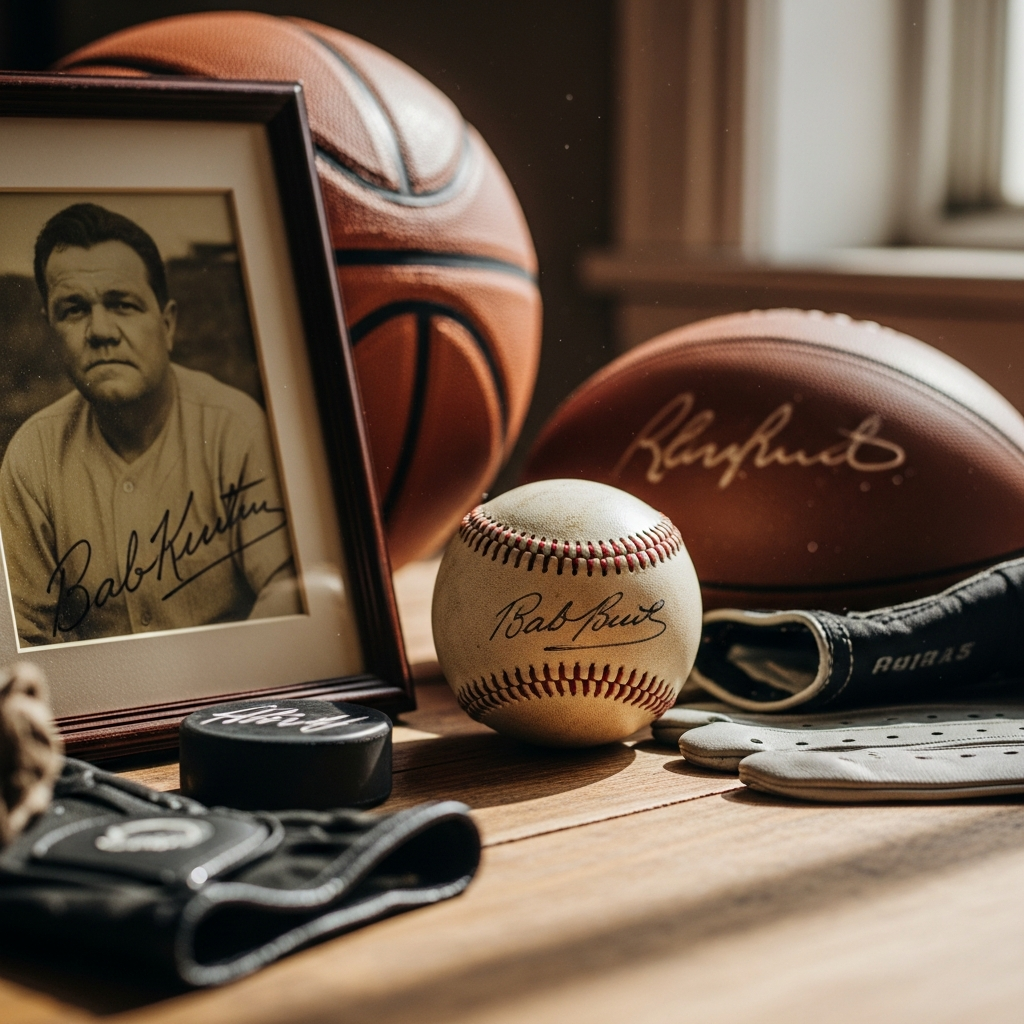
Why Autographs Matter
That’s what makes autograph collecting endearing to us who value connection — a signature represents physical contact between athlete and item. That moment can’t be mass-produced.
Unlike cards, autographs are inherently limited by the signer’s willingness and longevity.
Historical Context
Probably should have led with this section, honestly. Autograph collecting has evolved:
- Pre-1960 – Autographs were uncommon, often obtained in person
- 1960-1990 – Show signings emerged, authentication informal
- 1990-2010 – Authentication companies formalized the market
- 2010-present – Certified autos on cards became standard
The Premium on Vintage
Signatures from deceased legends command premiums:
- Supply is permanently fixed
- Authenticity concerns require careful vetting
- Historical significance adds value
- Connection to era enhances meaning
Signature Evolution
Players’ autographs change over careers:
- Early career: Often more elaborate
- Peak fame: May simplify due to volume
- Late career: May decline due to health
Understanding signature evolution helps with authentication.
Building Legacy Value
Autographs that hold value long-term:
- Hall of Fame players
- On quality items (cards, photos, equipment)
- With proper authentication
- In good condition (unfaded, clear)
Preservation Requirements
Autographs need protection from:
- UV light (fades ink)
- Humidity (can blur signatures)
- Physical contact (oils degrade ink)
- Temperature extremes
Store signed items with the same care as the most valuable cards in your collection.




Stay in the loop
Get the latest collector sports world updates delivered to your inbox.