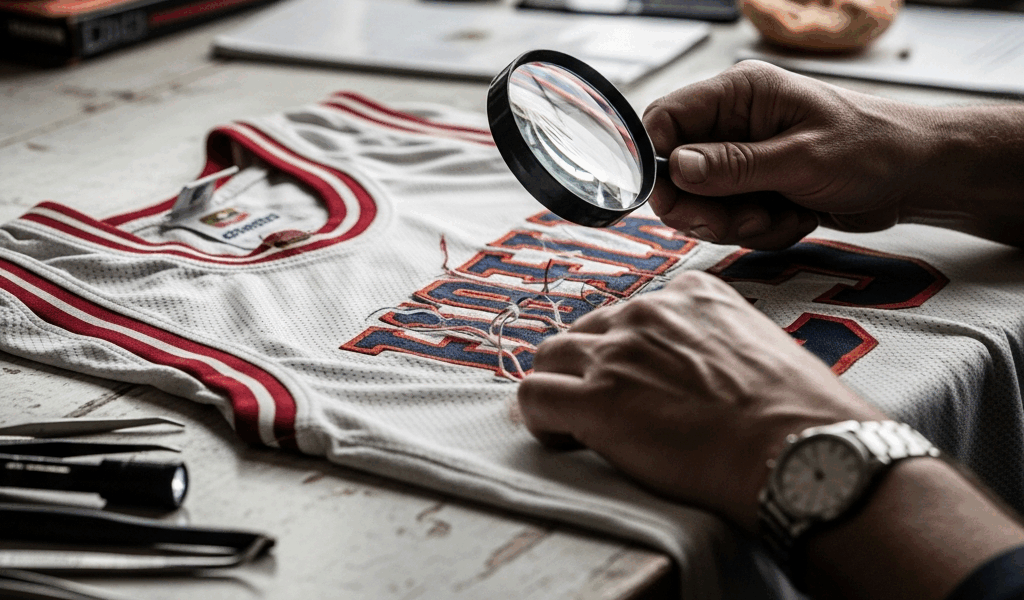
You’re looking at a game-worn jersey listed for $3,000, and the seller says it’s authentic. Maybe there’s a letter of authenticity included, maybe there isn’t. Before you spend that kind of money, you need to know exactly what authentication means in the game-worn market, who the trusted authenticators are, and what the red flags look like.
Authentication LOAs — Who Collectors Trust
Not all letters of authenticity are created equal. In the game-worn jersey market, one name stands above the rest:
MEARS (Memory Lane Expert Authentication and Rating Services): The gold standard for game-worn authentication. MEARS specializes exclusively in game-used equipment — jerseys, bats, helmets, gloves. Their grading system (A1 through A10) reflects the level of documented game use, with A10 being definitively photomatched to a specific game. A MEARS LOA on a jersey is the strongest authentication you can get, and serious collectors require it for high-value purchases.
PSA/DNA: Strong for autograph authentication but not the top choice for game-worn jerseys. PSA/DNA can authenticate signatures on jerseys, but their game-worn expertise is secondary to MEARS.
JSA (James Spence Authentication): Similar to PSA/DNA — trusted for autographs, less specialized for game-worn equipment.
Beckett Authentication: Autograph authentication is their primary business. For game-worn items, look to MEARS first.
The key distinction: autograph authentication (PSA/DNA, JSA, Beckett) verifies that a signature is genuine. Game-worn authentication (MEARS) verifies that a jersey was actually worn in a game. These are completely different evaluations requiring different expertise. A jersey can have a genuine autograph from PSA/DNA and still be a replica that was never worn in a game.
Jersey Tags — What to Look For by Era
Every major sports league has used different manufacturers across different decades, and the tags, labels, and construction details change accordingly. Knowing what the correct tag looks like for a given year is a basic authentication step that eliminates many obvious fakes.
NFL: Russell Athletic manufactured NFL jerseys through the early 2000s. Reebok took over from 2002-2012. Nike has been the exclusive manufacturer since 2012. A jersey claimed to be game-worn in 1998 should have Russell Athletic tags. If it has Nike tags, it’s wrong for the era — either misdated or fake.
MLB: Wilson, Rawlings, Russell Athletic, and Majestic have all produced MLB jerseys depending on the team and era. Majestic was the exclusive provider from 2005-2019. Under Armour was supposed to take over but the deal fell through; Nike/Fanatics assumed the contract starting in 2020. Check the manufacturer against the claimed year.
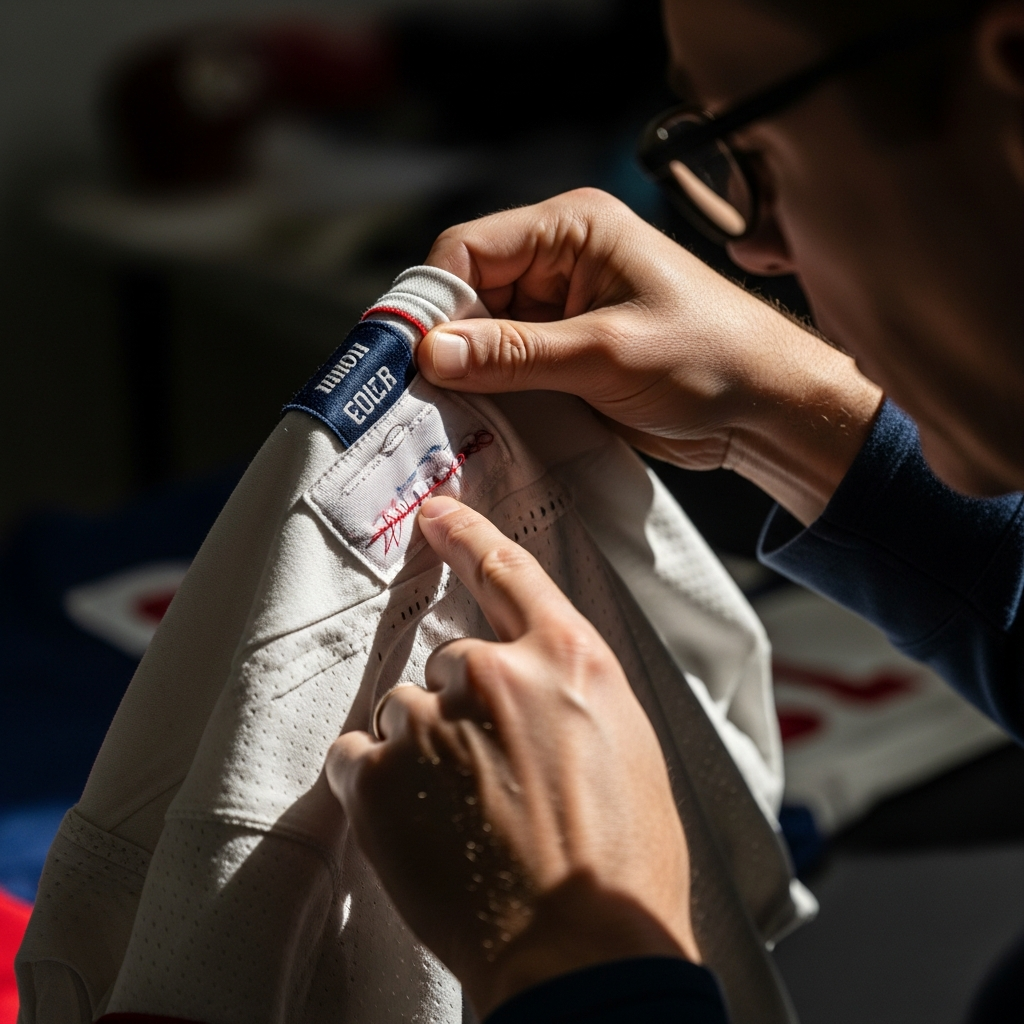
Size tags and player name strips: Game-worn jerseys often have player identification strips sewn inside — a small tag with the player’s name or number for the equipment manager’s reference. These strips vary by team and era. Their presence doesn’t guarantee authenticity (they can be added), but their absence on a jersey claimed to be team-issued is a yellow flag worth investigating.
The Photomatch Process
Photomatching is the process of matching specific physical characteristics of a jersey — fabric patterns, stains, repairs, unique wear marks, loose threads — to game photographs. It’s the most compelling form of authentication because it ties a specific jersey to a specific game or time period through photographic evidence.
Getty Images is the primary source for high-resolution game photography. Authenticators compare the jersey in hand against hundreds or thousands of game photos, looking for unique identifying marks that appear in both.
MEARS photomatch grades: A1 is a definitive, conclusive photomatch — the jersey is unmistakably identified in game photos from a specific date or game. A2 is a strong match with high confidence but not absolute certainty. B-grade matches are probable but not definitive. The grade significantly affects the jersey’s market value — an A1 photomatched jersey commands a substantial premium over an unmatched example.
Red Flags — Signs a Jersey Is Not Game Worn
Wrong tagging for the era. A 1995 NFL jersey with Reebok tags instead of Russell Athletic. An MLB jersey from 2003 with Nike instead of Majestic. This is the fastest way to spot a fake — the manufacturer-date mismatch is objective and verifiable.
Too clean. Game-worn jerseys show use — grass stains on football jerseys, pine tar on baseball pants, stretched or pilled fabric from physical contact. A jersey that looks like it came off the retail rack was never worn in a game.
Wrong size for the player. A jersey claimed to be worn by a 6’2″ 220-pound player that’s tagged as a size 44 (medium) is physically wrong. Check the player’s listed dimensions against the jersey size.
Inconsistent number font or letter style. Teams use specific fonts and number styles that change over seasons. A number that doesn’t match the team’s style for the claimed year suggests a custom or replica jersey.
Letters and numbers too crisp. Heat-pressed or screen-printed nameplates on jerseys claimed to be from eras that used sewn-on tackle twill letters are obvious fakes. Check the construction method against the era.
What Authentication Costs
MEARS authentication runs $100-300 per jersey depending on the service level and the era of the item. Turnaround is typically 4-8 weeks. You ship the jersey to MEARS, they examine it, compare against their databases and photographic references, and issue an LOA if they conclude it’s genuine.
When the LOA arrives, verify that it includes: the specific player, the team, the approximate season or year range, the MEARS grade, a description of the jersey’s characteristics, and a unique LOA number. A legitimate MEARS LOA is a research document, not just a stamp of approval.
For high-value purchases ($1,000+), MEARS authentication isn’t optional — it’s the cost of doing business. No serious collector buys an expensive game-worn jersey without independent authentication, and no reputable seller objects to having their item examined. If a seller resists authentication, walk away.

Stay in the loop
Get the latest collector sports world updates delivered to your inbox.