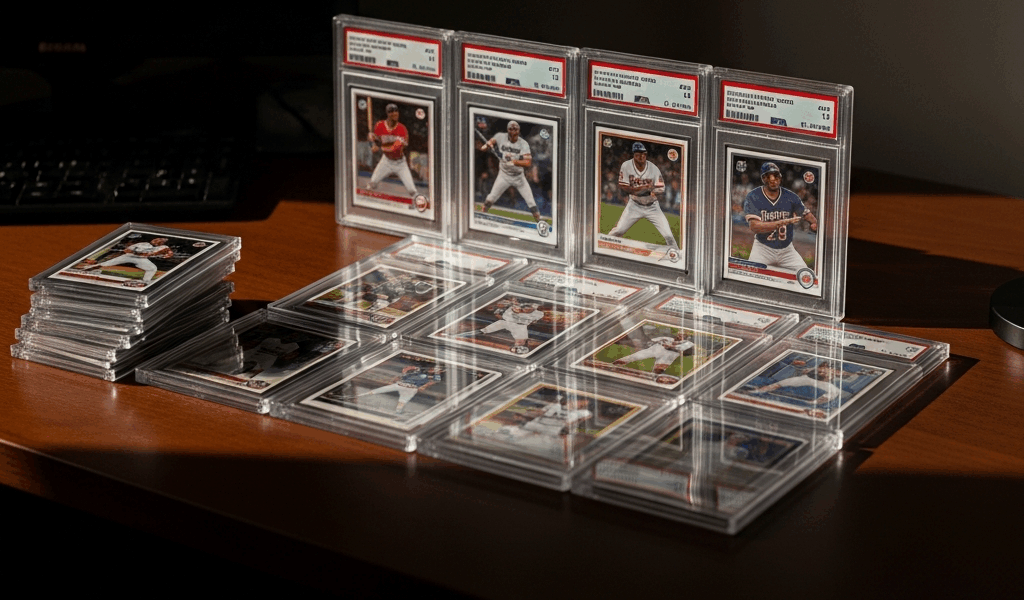
You’ve got a stack of cards you think might be worth grading, and PSA is the name everyone mentions. But between the fees, the wait times, and the shipping risk, the question isn’t whether PSA is the best service — it’s whether grading makes financial sense for your specific cards.
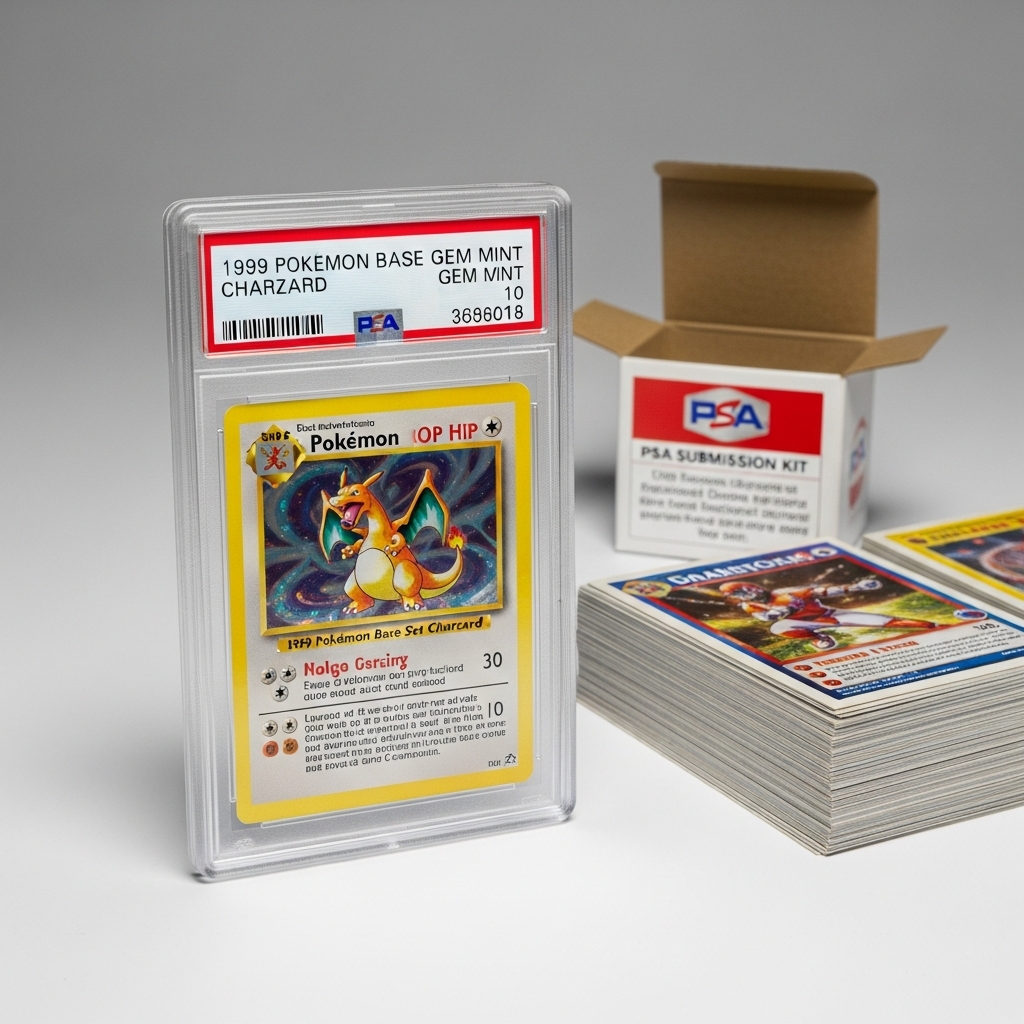
PSA Grading Fees in 2026
PSA’s fee structure changes regularly, so verify current pricing on their website before submitting. As of early 2026, the tiers look roughly like this:
Economy (~$20/card): Declared value cap of $499 per card. Turnaround: 6+ months. This is the tier for bulk submissions of cards you believe are worth $40-500 raw.
Regular (~$50/card): Declared value cap of $999. Turnaround: 2-3 months. The sweet spot for cards in the $100-500 raw value range where faster turnaround matters for market timing.
Express (~$150/card): Declared value cap of $2,499. Turnaround: measured in weeks. Only makes sense for high-value cards where the grading premium significantly exceeds the fee.
On top of the per-card fee, factor in shipping both ways (insured), packaging materials, and PSA’s return shipping charges. The true cost of grading a single card at Economy is closer to $30-35 when you add everything up.
The Math — When Grading Makes Financial Sense
Graded cards typically sell for 2x to 5x what the same card brings raw, depending on the grade and the card’s desirability. But that multiplier only matters if the final number exceeds your total grading cost by enough to justify the hassle.
Economy tier example: A raw card worth $40 that grades PSA 9 might sell for $80-120. After $30-35 in total grading costs, your net gain is $10-45. Marginally worth it, but only if it actually grades a 9. If it comes back a PSA 7, the graded value might be $50-60 — barely breaking even after fees.
Regular tier example: A raw card worth $200 that grades PSA 10 could sell for $600-1000. After $65-70 in total costs, the return is substantial. But PSA 10s are rare — most cards grade PSA 8 or 9, where the multiplier is lower.
Express tier: Only pencils out for cards with raw values above $300 where the PSA 9-10 premium is dramatic. Think rookie cards of Hall of Famers, key vintage issues, or modern cards with strong PSA 10 premiums.
The honest rule of thumb: if the raw card isn’t worth at least 3x the grading fee, don’t grade it. Below that threshold, the risk of getting a lower-than-expected grade eats your margin.
When PSA Grading Is NOT Worth It
Sentimental cards you won’t sell. If you’re grading your childhood Griffey rookie because you want it in a slab — that’s fine, but call it what it is. It’s a display expense, not an investment.
Cards with massive PSA 10 populations. When 15,000 copies of a card already exist in PSA 10, yours doesn’t command a premium — it’s commodity inventory. Check the PSA population report before submitting. If the PSA 10 count is in the thousands, the graded premium is already compressed.
Cards below the financial threshold for your fee tier. Grading a $15 card at any tier is losing money. Even at Economy, you’re paying $30+ to authenticate a card that might sell for $25-35 graded. The math doesn’t work.
Cards with obvious flaws. If you can see centering issues, surface scratches, or corner damage without magnification, the card isn’t grading a 9 or 10. A PSA 6 or 7 on a common card rarely commands enough premium to justify the grading fee.
BGS and SGC — When to Use Them Instead
Beckett Grading Services (BGS): Offers subgrades for centering, corners, edges, and surface. Modern card collectors (2010s-present) increasingly prefer BGS because the subgrades provide more information about exactly why a card received its grade. BGS 9.5 Gem Mint is the gold standard for modern card collectors. Fees are comparable to PSA.
SGC (Sportscard Guaranty): Faster turnaround and generally lower fees than PSA. SGC has built a strong reputation for vintage card grading — pre-1970 cards in SGC holders are widely accepted by serious vintage collectors. If you’re grading a 1956 Topps Mickey Mantle, SGC is a credible alternative to PSA with potentially faster service.
PSA still commands the largest market premium for most cards, particularly modern issues. But the gap has narrowed, and for vintage cards or when turnaround time matters, BGS and SGC are legitimate options that may make more financial sense.
How to Submit — The Practical Steps
Create a PSA account, select your service tier, fill out the submission form (card details, declared value per card), and print the packing slip. Place each card in a penny sleeve inside a top loader. Use painter’s tape to seal the top loader — never tape directly to the card or sleeve. Stack top loaders in a small box with padding on all sides. Ship with tracking and insurance matching your declared value.
PSA processes the submission, grades each card, slabs them, and ships back. Track your submission status through your PSA account. When the cards return, verify each grade against your expectations and list for sale if the numbers make sense.

Stay in the loop
Get the latest collector sports world updates delivered to your inbox.